
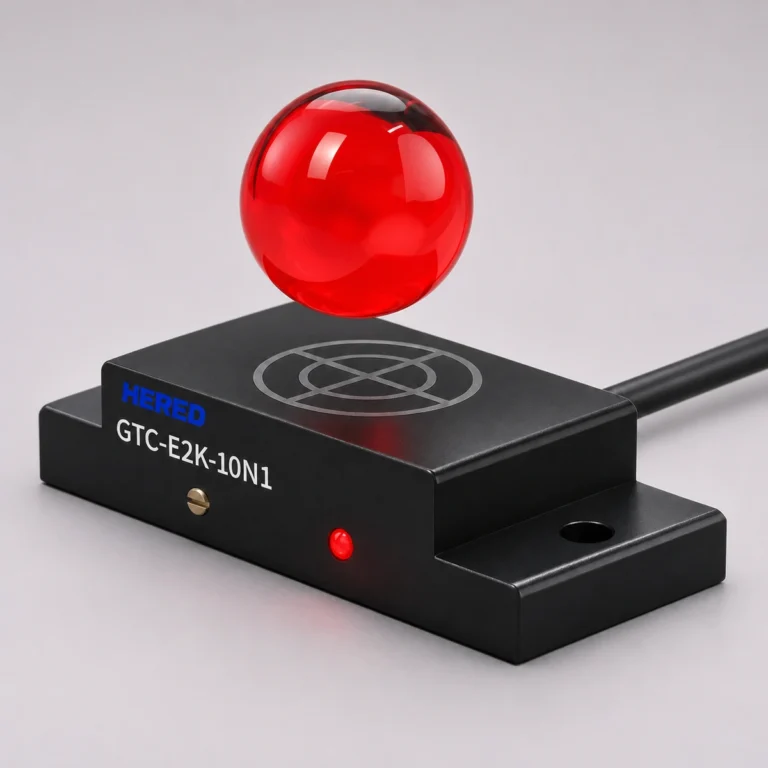
Capacitive Proximity Sensor Selection Guide: Dielectrics, Level & Tuning
Capacitive sensors detect liquids, plastic pellets, grain, glass, and powders — even through non-metallic tank walls — but only when sized correctly for dielectric constant (εr), wall thickness, and condensation immunity.
11 Series · Cyl & Flat
Through-Wall Level (HCL)
Dielectric εr Sizing
Trim-Pot Sensitivity
Dielectric reality check: A capacitive sensor rated at 10 mm on grounded metal or water (εr ≈ 80) may drop to just 2–3 mm on dry polypropylene pellets (εr ≈ 2.2) — and drift permanently ON if wet product cakes onto the sensing face. Always size capacitive models by the target’s dielectric constant and tank wall ratio, never by nominal metal Sn alone.
1. How HERED’s Capacitive Sensor Lineup Splits by Mechanical Task
Across our 11 published capacitive proximity sensor series, mechanical selection starts with two core architectures: threaded cylindrical barrels for machine brackets and hopper ports, and low-profile flat / external-clamp housings engineered specifically for non-contact liquid level monitoring through plastic or glass sight tubes.
| Capacitive Sub-Family | Housing Form & Size | Nominal Sn Range | Primary Engineering Application | Published HERED Series |
|---|---|---|---|---|
| Standard Cylindrical Capacitive | M12, M18, M30 threaded barrels (flush & non-flush) | 2 mm – 25 mm (trim-pot adjustable) | Plastic/glass part presence, resin hopper level, carton-fill check, feed-chute jam detection | CR12, CR18, CR30, HCN, HCT, HCM15, HCS15 |
| Flat Block Capacitive | Slim rectangular/flat pad housing | 5 mm – 15 mm | Tight clearance stack-height sensing, flat conveyor belt underside detection, PCB/wafer cassette check | HCF Series |
| Non-Contact Liquid Level Capacitive | Flush-mount external wall/pipe sensor pad | Detects water/aqueous media through 2–12 mm non-metallic walls | External high/low level monitoring on medical, chemical, ink, coolant, and beverage tanks without drilling | HCL, HCL13, HCL26 |
2. Step 1: Size Operating Distance Using the Target Dielectric Constant (εr)
A capacitive proximity sensor measures the capacitance change between its active front electrode and ground as a material enters its electrostatic field. Under IEC 60947-5-2, nominal sensing distance (Sn) is measured using a grounded ST37 steel target. For non-metallic solids and liquids, effective sensing distance scales directly with the material’s relative dielectric constant (εr):
| Target Material / Medium | Typical Dielectric Constant (εr) | Approximate Range Factor vs. Nominal Sn | Sizing & Selection Guidance |
|---|---|---|---|
| Water & aqueous solutions | ~80 | 0.95 – 1.00× | Strongest non-metallic response; easily detected through 4–10 mm plastic or glass tank walls (HCL Series) |
| Ethanol / Methanol / Glycol coolant | 24 – 38 | 0.85 – 0.95× | Reliable non-contact level detection; confirm housing chemical compatibility if direct-contact |
| Glass (soda-lime / borosilicate) | 4.5 – 8.0 | 0.55 – 0.70× | Reliable bottle presence and sight-glass detection; requires careful trim-pot balance for through-glass sensing |
| PVC, Nylon (PA), Wood (dry), Grain | 3.0 – 5.0 | 0.40 – 0.60× | Use M18 (CR18) or M30 (CR30) for adequate margin; note moisture content shifts εr in grain/wood |
| Mineral oils, Diesel, Hydraulic oil | 2.1 – 2.5 | 0.25 – 0.40× | Low εr requires non-flush M18/M30 or dedicated contact thermowell; very difficult through thick plastic walls |
| PE / PP / PTFE plastic pellets, Dry flour, Cardboard | 1.8 – 2.5 | 0.20 – 0.35× | Use larger M30 (CR30) non-flush barrels to maintain repeatable switching against low-εr powders |
3. Step 2: Engineering Rules for Through-Wall Liquid & Pellet Level Sensing
One of the biggest commercial advantages of capacitive sensors is monitoring liquid or bulk level from the outside of a sealed vessel — zero tank drilling, zero contamination risk, and zero wetted-seal leakage. However, physics enforces one strict ratio:
The Through-Wall Ratio Rule: To reliably ignore a tank wall while detecting the medium inside, the medium’s dielectric constant should be at least 3× to 5× higher than the container wall’s dielectric constant, and the wall must be non-metallic (HDPE, PP, PVC, acrylic, or glass — never metal or carbon-filled conductive plastic).
- Easy combination (High reliability): Water, milk, acid/alkali solutions, or coolant (εr ≈ 30–80) inside a 2–8 mm HDPE/PP/PVC tank (εr ≈ 2.2–3.5). Mount an HCL, HCL13, or HCL26 flat level sensor tightly against the clean tank exterior with zero air gap.
- Borderline combination (Requires test sample): Vegetable oil or dry resin pellets (εr ≈ 2.2–3.0) inside a thick 6 mm plastic wall (εr ≈ 2.5). Because both materials have nearly identical dielectric constants, small wall thickness variations can mask the product inside. Use a thin sight tube (≤ 3 mm wall) or switch to a threaded immersion sensor port with a PTFE sleeve.
- Zero-air-gap mounting: Even a 1 mm wobble or air gap between the sensor face and the tank wall sharply attenuates the electrostatic field. Clamp or strap the sensor flush against the tank wall so vibration cannot shift the baseline capacitance.
4. Step 3: Flush vs. Non-Flush & Preventing Buildup / Condensation False Triggers
- Flush (shielded) capacitive barrels: Best for flat solid targets (cartons, glass panels, stacks of wafers) and mounting inside metallic machine brackets. Because the electrostatic field is focused forward, flush sensors are less disturbed by surrounding metal frames, though their nominal sensing range is shorter.
- Non-flush (unshielded) capacitive barrels: Essential for bulk powders, plastic pellets, animal feed, and grain hoppers where the sensor tip protrudes slightly into a silo wall or PTFE mounting well. Non-flush tips offer 1.5–2× the range on low-εr materials and include an active guard-ring electrode geometry that resists minor dry dust films.
- Field trim-pot calibration SOP: Never turn the multi-turn sensitivity potentiometer to maximum. Follow the 3-step factory rule: (1) mount sensor against the empty tank or fixture, (2) turn the pot clockwise until the LED just triggers on the empty wall, (3) back off counter-clockwise 1.5–2 turns until the LED turns off cleanly, then verify solid switching when the liquid/material fills the zone.
5. Step 4: Electrical Output, Switching Speed & Housing Material
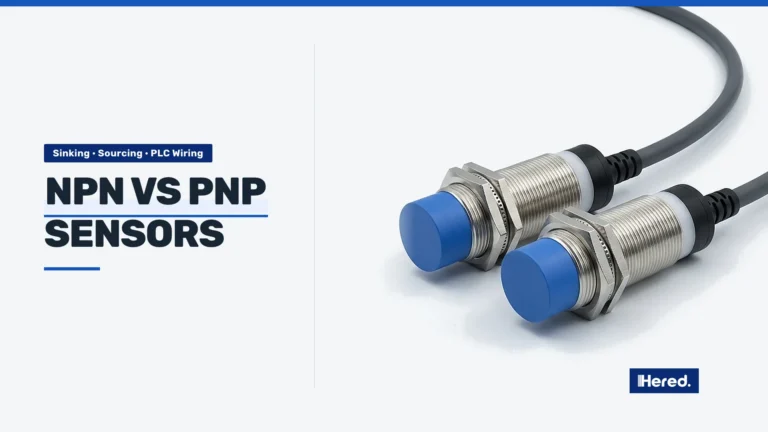
- Output & voltage options: HERED capacitive sensors are available in DC 3-wire (10–30 V DC, PNP or NPN, NO/NC/complementary) for PLC control panels, as well as AC 2-wire (90–250 V AC) for direct hopper alarm relays and feeder motors. See NPN vs. PNP Sensors for PLC input wiring polarity.
- Switching frequency reality: Capacitive sensors are slower than inductive or optical switches — typically 20 to 100 Hz for DC models and 10–15 Hz for AC models. That is more than fast enough for tank level, hopper fill, and carton checks, but too slow for high-speed gear-tooth or 500 ppm bottle-cap counting.
- Chemical & washdown resistance: Standard nickel-plated brass or PBT plastic housings handle dry powders, packaging lines, and neutral coolants at IP67. For acidic/alkaline chemical tanks, mount an external HCL sensor outside a plastic tank wall or specify PTFE/stainless-body cylindrical models with a protective PTFE sensor well.
6. Where Capacitive Proximity Sensors Stop Working (When to Switch Families)
Detecting Metal Parts Only
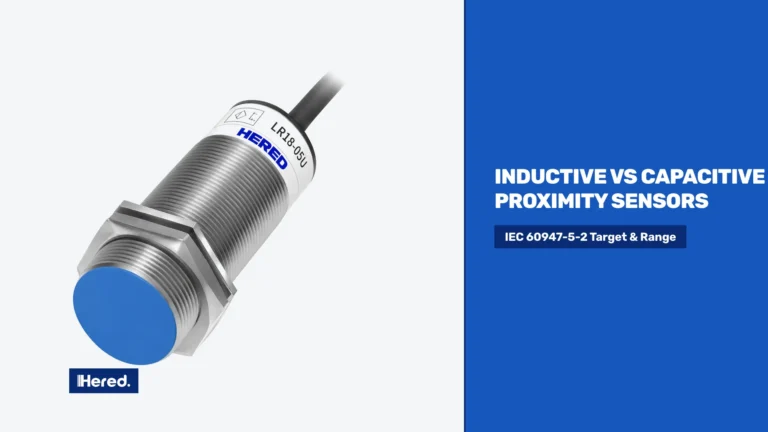
If your target is purely metal, a capacitive sensor is a downgrade: it triggers falsely on oil splashes, operator hands, and plastic debris. Always default to an inductive proximity sensor — see Inductive vs. Capacitive for the exact decision boundary.
Conductive Tank Walls (Steel / Aluminum / Carbon Plastic)
Electrostatic fields cannot penetrate metal tanks or anti-static carbon-filled plastic containers. Use a sight-glass bypass tube with an external HCL sensor or top-mount an ultrasonic level sensor (HU600-F42).
Sticky Viscous Liquids & Heavy Condensation
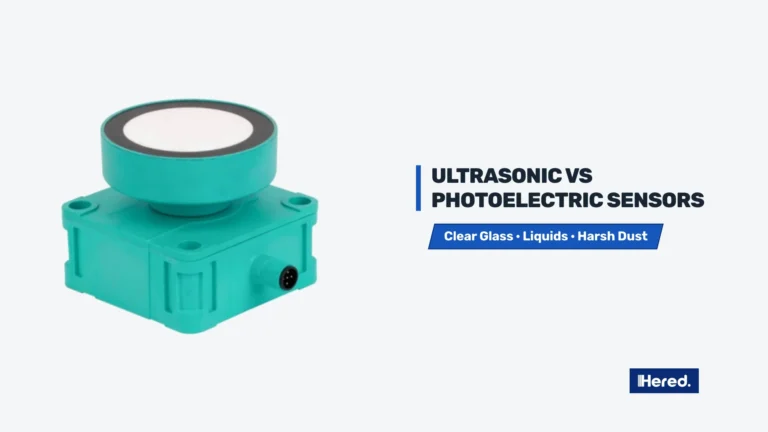
Thick syrup, wet slurry, or condensing steam clinging to the inside wall mimics a full tank even after the liquid drains. Use a top-down non-contact ultrasonic sensor (Ultrasonic vs. Photoelectric) or flush-mount cleaning cycles.
Long-Range Non-Contact Detection (> 25 mm)
Capacitive range tops out around 20–25 mm on M30 housings. Beyond 25 mm, move to BGS photoelectric or ultrasonic sensing.
7. Capacitive Sensor RFQ Checklist (6 Fields for Accurate Sizing)
Include these six parameters when requesting samples or OEM quotes from our Capacitive Sensor Manufacturer Hub:
- Target material & moisture state: Exact liquid, plastic, powder, or solid (e.g., dry PP pellets vs. 20% saline water).
- Direct sensing vs. through-wall level: If through-wall, specify exact container material and wall thickness (mm).
- Housing form & mounting: M12 (CR12), M18 (CR18), M30 (CR30), flat (HCF), or external level (HCL).
- Electrical output: 10–30 V DC PNP/NPN (NO or NC) or 90–250 V AC 2-wire.
- Ambient environment: Temperature, condensation/washdown risk, and dust buildup likelihood.
- Quantity or competitor code: Sample count, OEM run rate, or existing Autonics CR18/CR30, Pepperl+Fuchs CBN/CJ, or Omron E2K part codes.
8. Frequently Asked Questions on Capacitive Sensor Selection
Can a capacitive proximity sensor detect water through an opaque HDPE plastic tank?
Yes. Because water has a high dielectric constant (εr ≈ 80) compared to HDPE plastic (εr ≈ 2.3), an external capacitive level sensor like the HERED HCL or HCL13 reliably detects liquid level right through opaque plastic walls up to ~8–10 mm thick with zero tank penetration.
Why does my capacitive sensor stay ON after the tank empties?
Two common causes: either the sensitivity trim pot is turned up too high so it triggers on the empty plastic wall itself, or a film of conductive liquid/wet foam is clinging to the interior wall. Recalibrate the potentiometer on the empty wetted tank wall, or switch to a top-down ultrasonic sensor for sticky media.
What size capacitive sensor is best for dry plastic resin pellets in an injection-molding hopper?
Because dry PE/PP/ABS resin pellets have a low dielectric constant (εr ≈ 2.0–2.5), an M12 sensor rarely provides enough margin. Specify a non-flush M18 (CR18) or M30 (CR30) barrel mounted in a sight window or threaded hopper boss.
Can a capacitive sensor detect inside a stainless steel tank?
Not from outside the steel wall — metal blocks electrostatic fields completely. To monitor level in a steel tank using a capacitive sensor, install a transparent/plastic sight-glass bypass tube externally or mount a threaded capacitive sensor directly through a boss/PTFE well in the tank wall.
How fast can a capacitive proximity sensor count parts on a conveyor?
DC 3-wire capacitive sensors typically switch at 20–100 Hz (roughly 20–50 parts per second max depending on target spacing). If your line runs faster or targets are spaced tightly, choose a photoelectric sensor.
PUBLISHED HERED SERIES
Recommended Capacitive Proximity Sensors Series
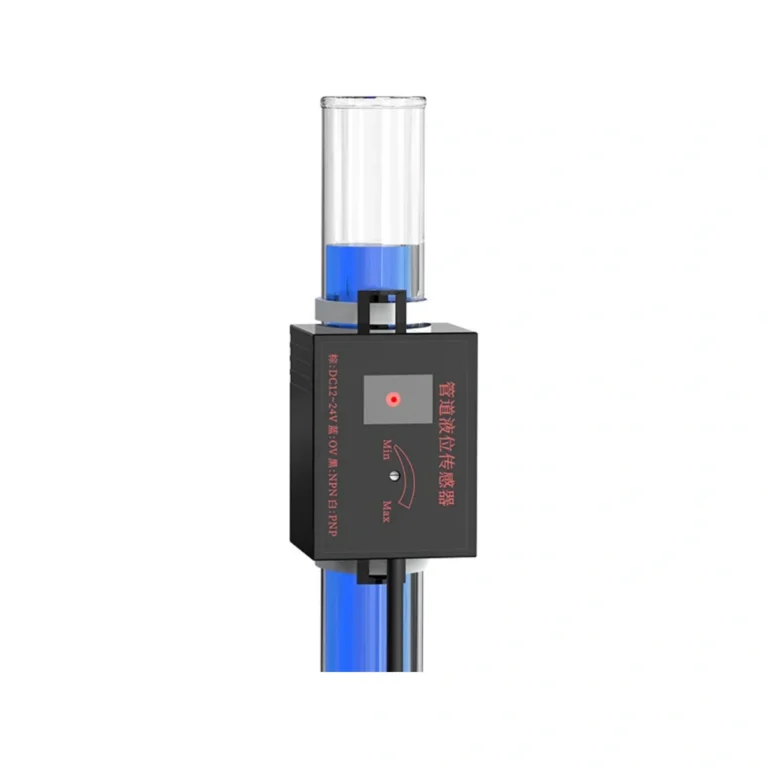
HCL Series Capacitive Liquid Level Sensor
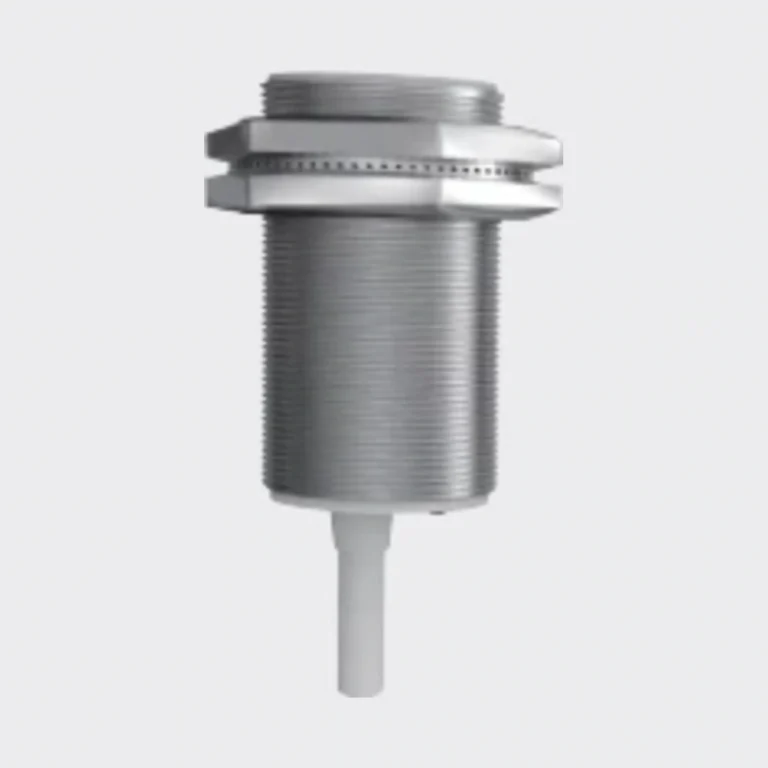
CR30 Series Cylindrical Capacitive Proximity Sensor
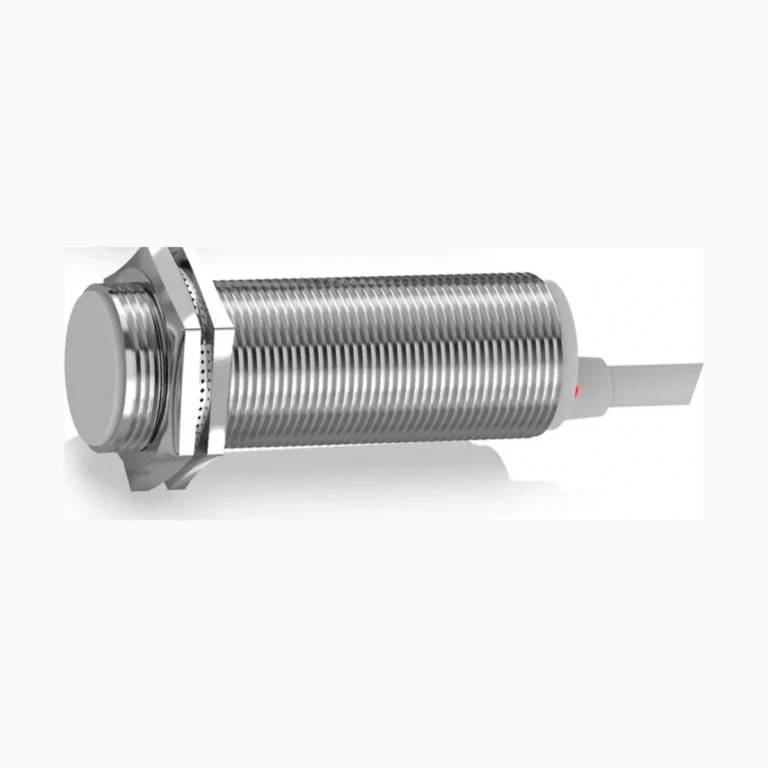
CR18 Series Cylindrical Capacitive Proximity Sensor
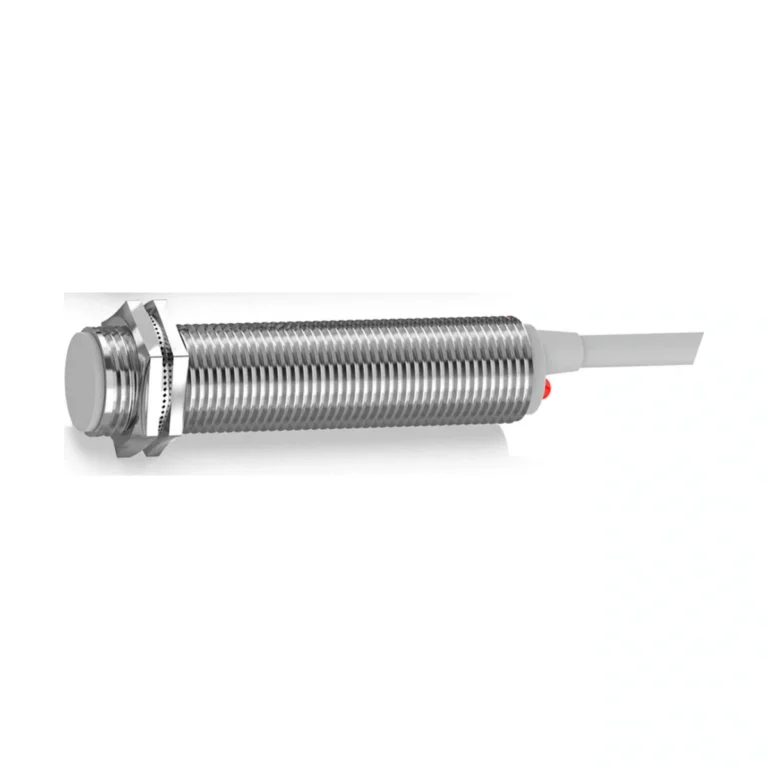
CR12 Series Cylindrical Capacitive Proximity Sensor
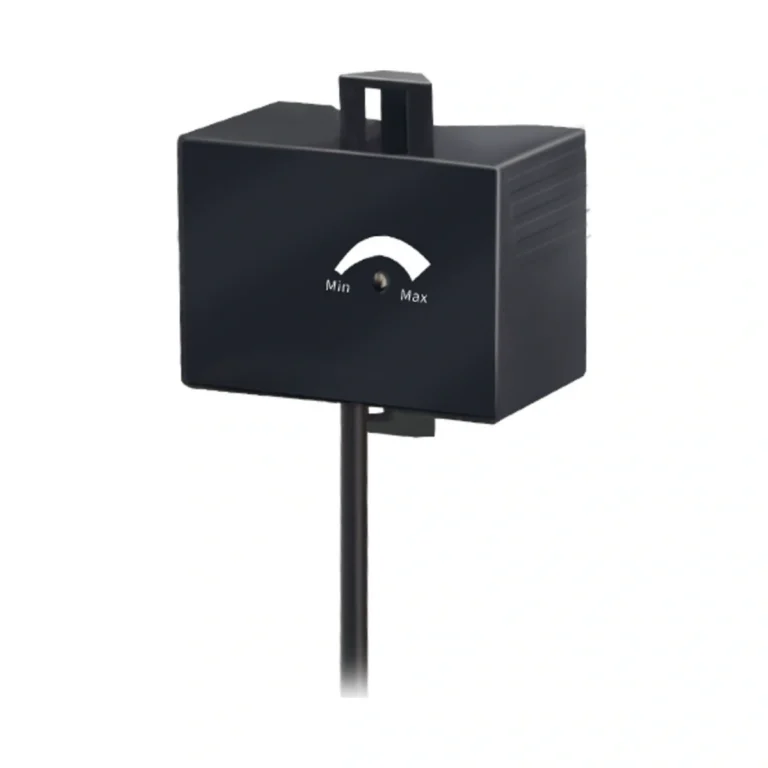
HCL26 Series Capacitive Liquid Level Sensor
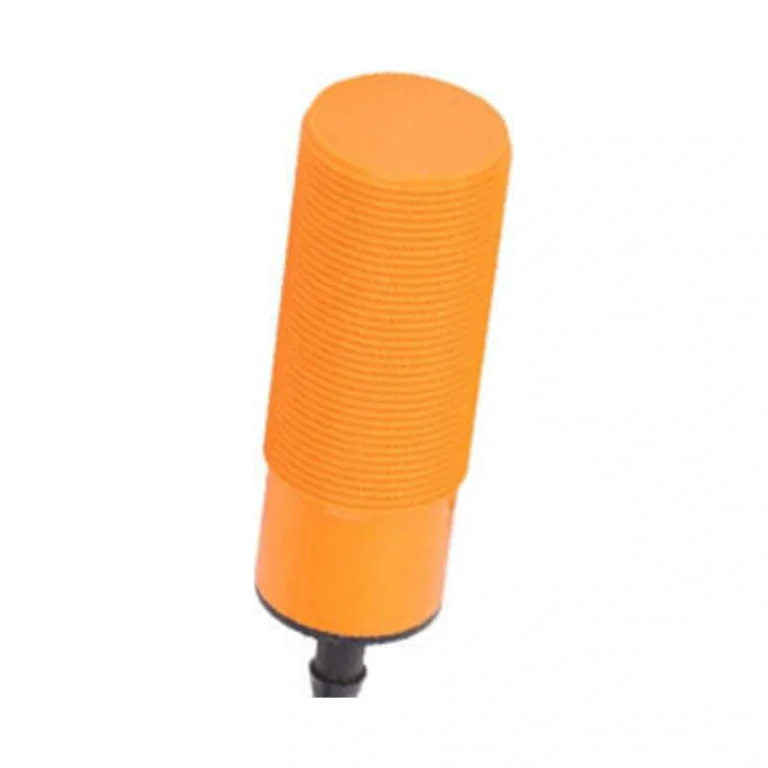
HCM15 Series Cylindrical Capacitive Proximity Sensor
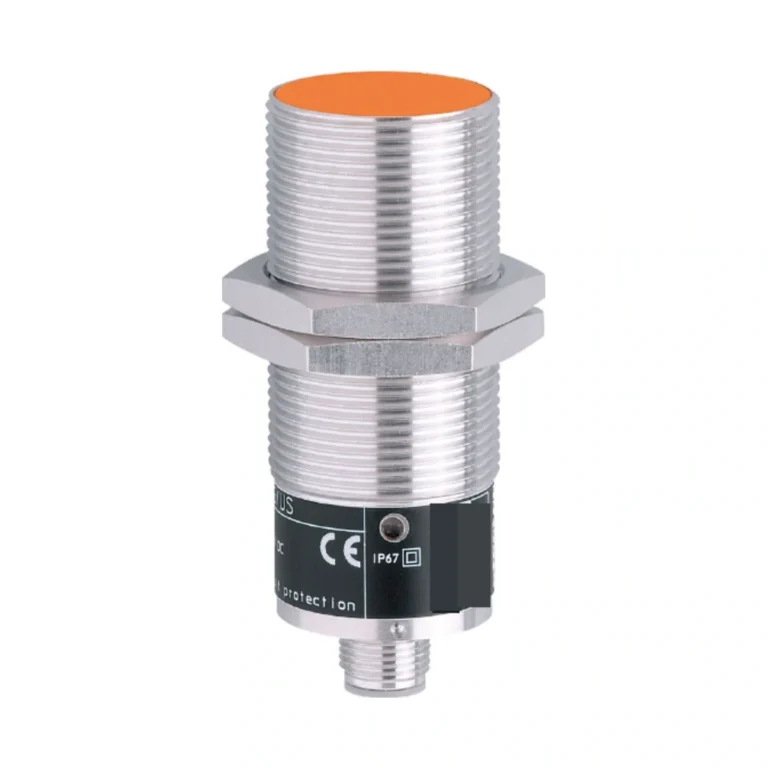
HCT Series Cylindrical Capacitive Proximity Sensor
DEEP-DIVE TECHNICAL COMPARISONS
Related Engineering Articles
ENGINEERING RFQ & SAMPLE SUPPORT
Send Your Capacitive Selection Requirements for a Direct Factory Quote
Share the parameters from this guide (target material, required range, housing size, output type, and quantity). Hered Electric engineering reviews every inquiry before quoting.
- Fast cross-reference: Send Omron, Sick, Pepperl+Fuchs, Autonics, or Turck part codes for pin-compatible HERED series.
- No-guesswork sizing: Include target metal/medium, mounting clearance, and PLC input type (sinking/sourcing).
- Direct contact: [email protected] · WhatsApp +86 180 6639 6588